
Why Destination Weddings Need More Than Just a Pretty Card
A destination wedding invitation is not just a card — it is a travel brief.
Your guests need to know:
- Where exactly are they going (not just the city)
- How to get there (nearest airport, recommended transport)
- Where to stay (room blocks, hotel recommendations)
- How long to plan for (is it 2 days or 4?)
- What to wear (outdoor summer wedding? Saree on cobblestones?)
If your invitation does not answer these questions, your guests will WhatsApp you 400 questions. And your week before the wedding will be spent as a travel consultant.
The Destination Wedding Communication Stack
1. Early Save the Date (6 Months Before)
Simple, elegant, essential. Date + city + "formal invitation to follow."
This is the trigger for your guests to block leave, check flight prices, and align with their family.
2. Travel & Accommodation Update (3–4 Months Before)
A second digital communication — not a full invitation, just useful information:
- Recommended hotels (with room block details if you've arranged them)
- Nearest airports and approximate drive times
- Travel tips (peak season, train vs flight, etc.)
- Dress code guidance (especially important for outdoor/beach weddings)
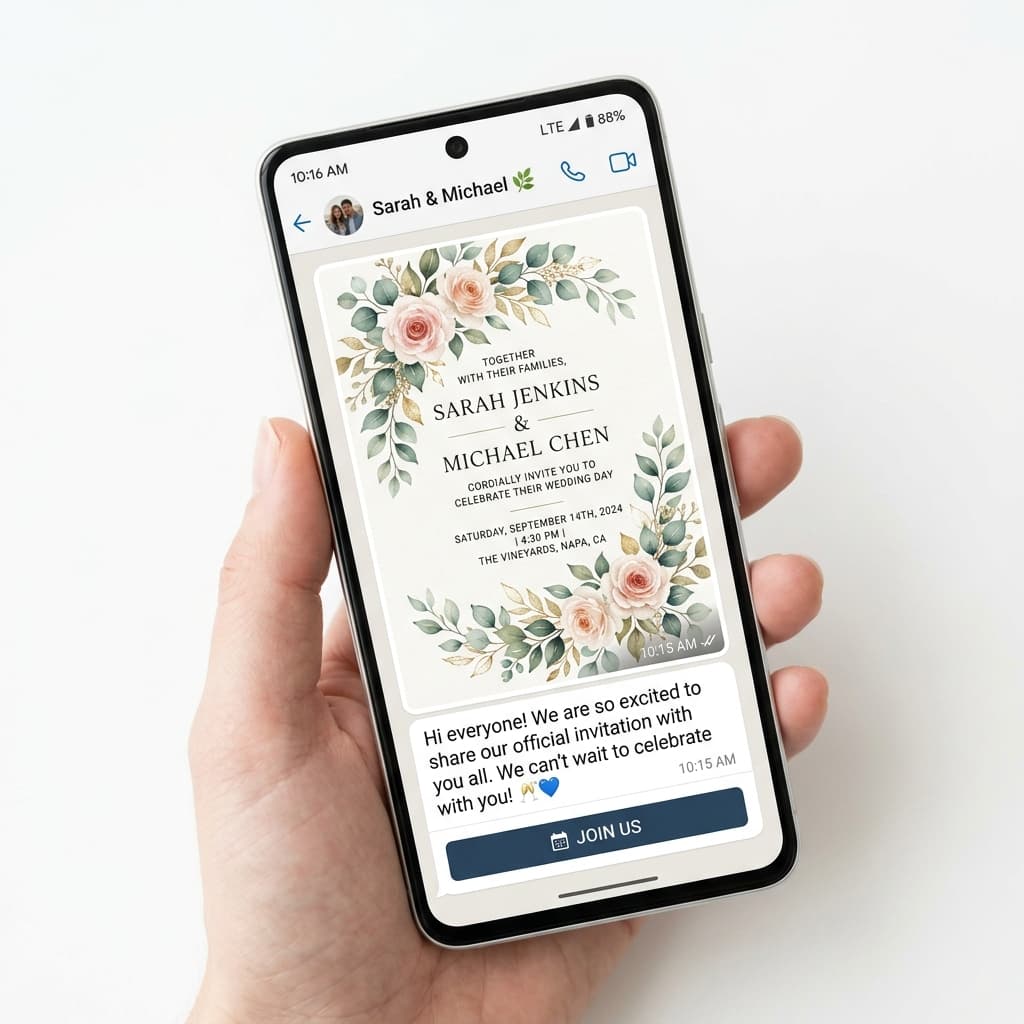
3. Formal Invitation (6–8 Weeks Before)
The full invitation with all event details. At this stage, guests have booked travel. The invitation confirms the specifics.
Include:
- Detailed venue name and address
- Function schedule (Day 1: Haldi, Day 2: Mehendi + Sangeet, Day 3: Wedding)
- RSVP link (with function-by-function attendance options)
- WhatsApp contact for queries
- Google Maps link
4. Pre-Wedding Welcome Message (3 Days Before)
Send a warm message to all confirmed guests:
> "We are so excited to have you join us in [City]! Here are a few things to know before you arrive: [venue address, parking, any logistics updates, emergency contact]"
This message makes guests feel cared for and eliminates last-minute confusion.