The RSVP Problem That Every Indian Family Knows
You have sent out 400 invitations. Your wedding is in 3 weeks.
Your mother is on the phone with relatives. Your father has a notebook. Your sister is managing a WhatsApp group. You have a spreadsheet open that no one is updating consistently.
By the day before the wedding, your caterer needs final numbers. You have 3 different headcounts from 3 different people in your family.
This is the RSVP problem. And it is universal in Indian weddings.
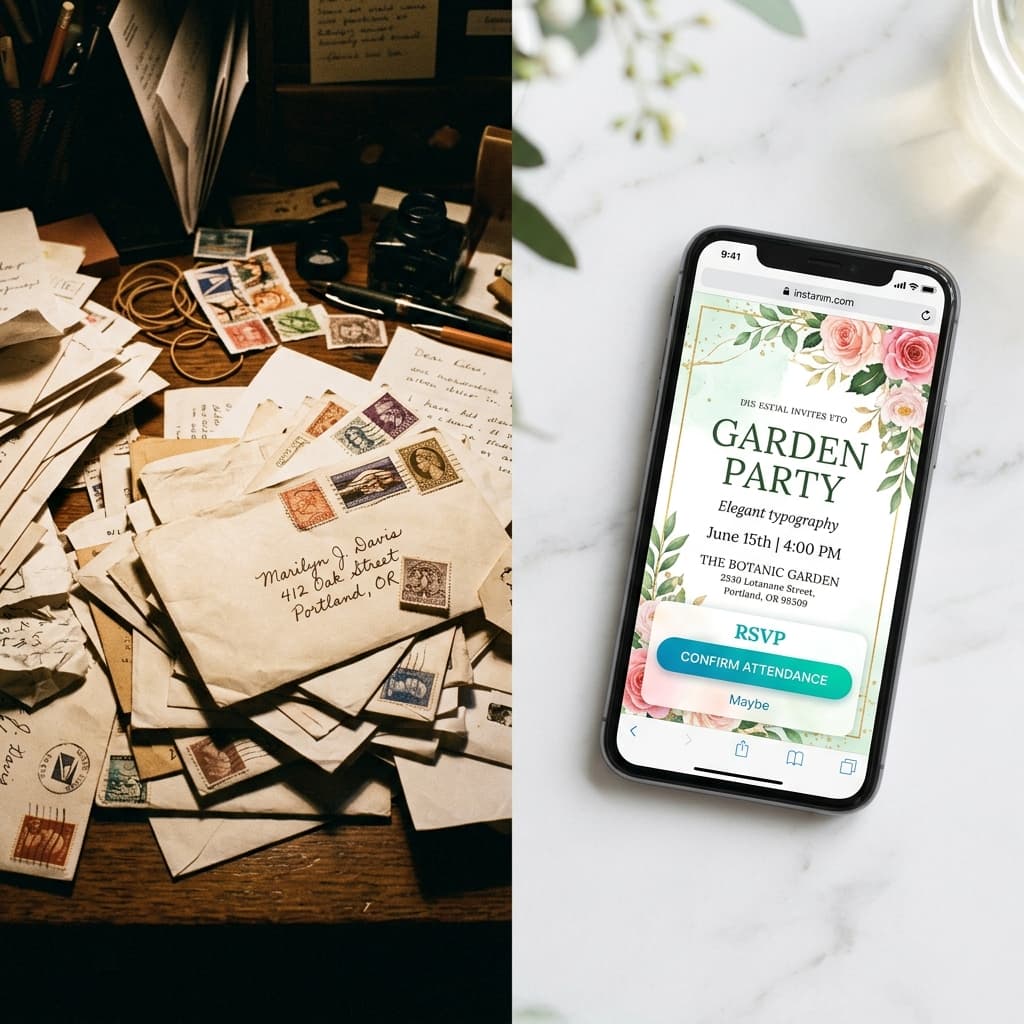
Why Traditional RSVP Methods Break Down
The Phone Call Method
- Time-consuming (20–30 minutes per family for close relatives)
- Information gets lost in translation between family members
- No central record — information lives in someone's phone memory
- Cannot scale beyond ~50 guests without becoming a full-time job
The WhatsApp Message Method
- Guests reply at different times, replies get buried in chat history
- No structured data — "yes we are coming" tells you nothing about numbers or which functions
- Impossible to aggregate data from hundreds of conversations
The Notebook Method
- Manual, error-prone
- Only one person has the information at any time
- Cannot be shared with the caterer, venue, or transport coordinator digitally
What Digital RSVP Looks Like for an Indian Wedding
A proper digital RSVP system for an Indian wedding works like this:
1. Unique RSVP Links Per Function
Each event (Haldi, Mehendi, Sangeet, Wedding, Reception) has its own RSVP link. When you share the Sangeet invitation, you include the Sangeet RSVP link. This way, a guest can confirm they are coming to the Sangeet but skipping the Haldi, which is realistic for distant relatives.
2. Guest-Friendly Form (Works on Any Phone)
The RSVP form should work on any smartphone, not require an app download, and be completable in under 60 seconds. It should ask:
- Guest name
- Number of people attending
- Which functions (if multi-event)
- Dietary preferences (if required)
3. Real-Time Host Dashboard
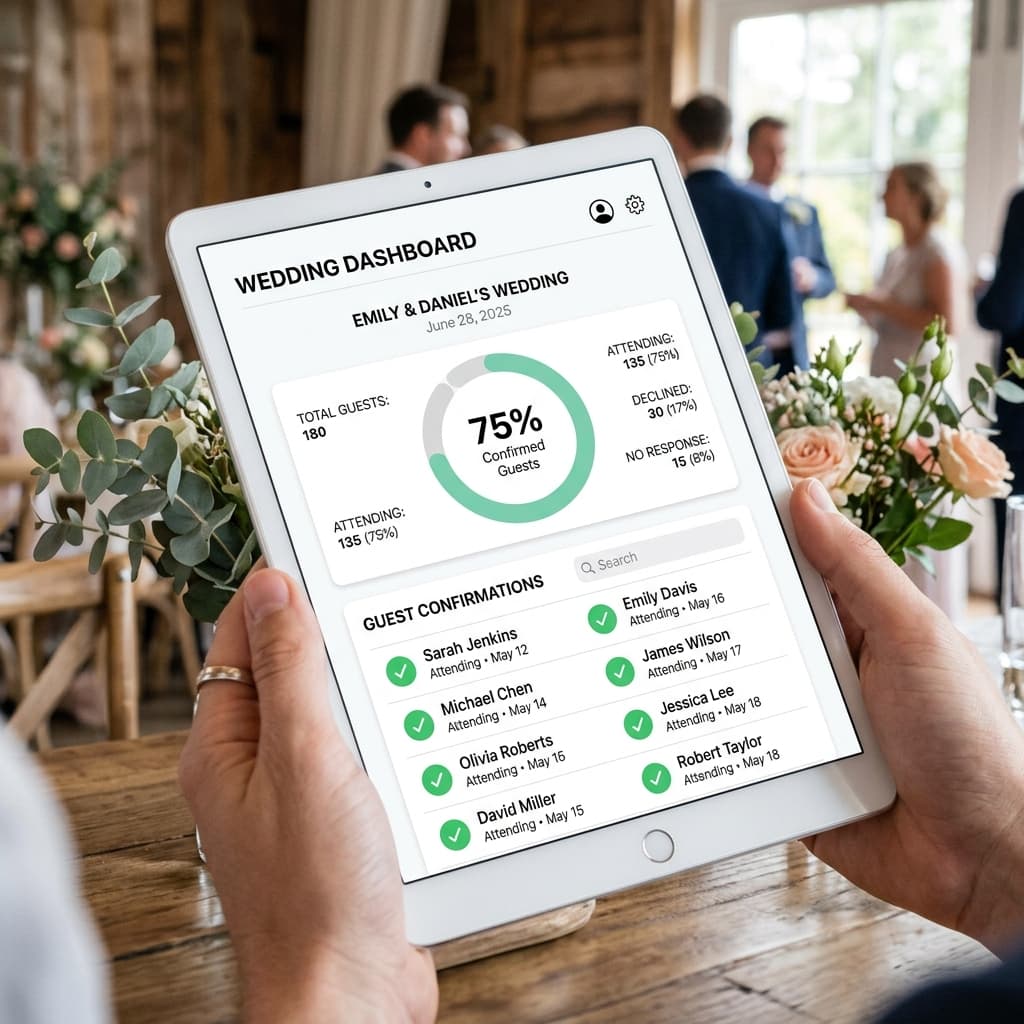
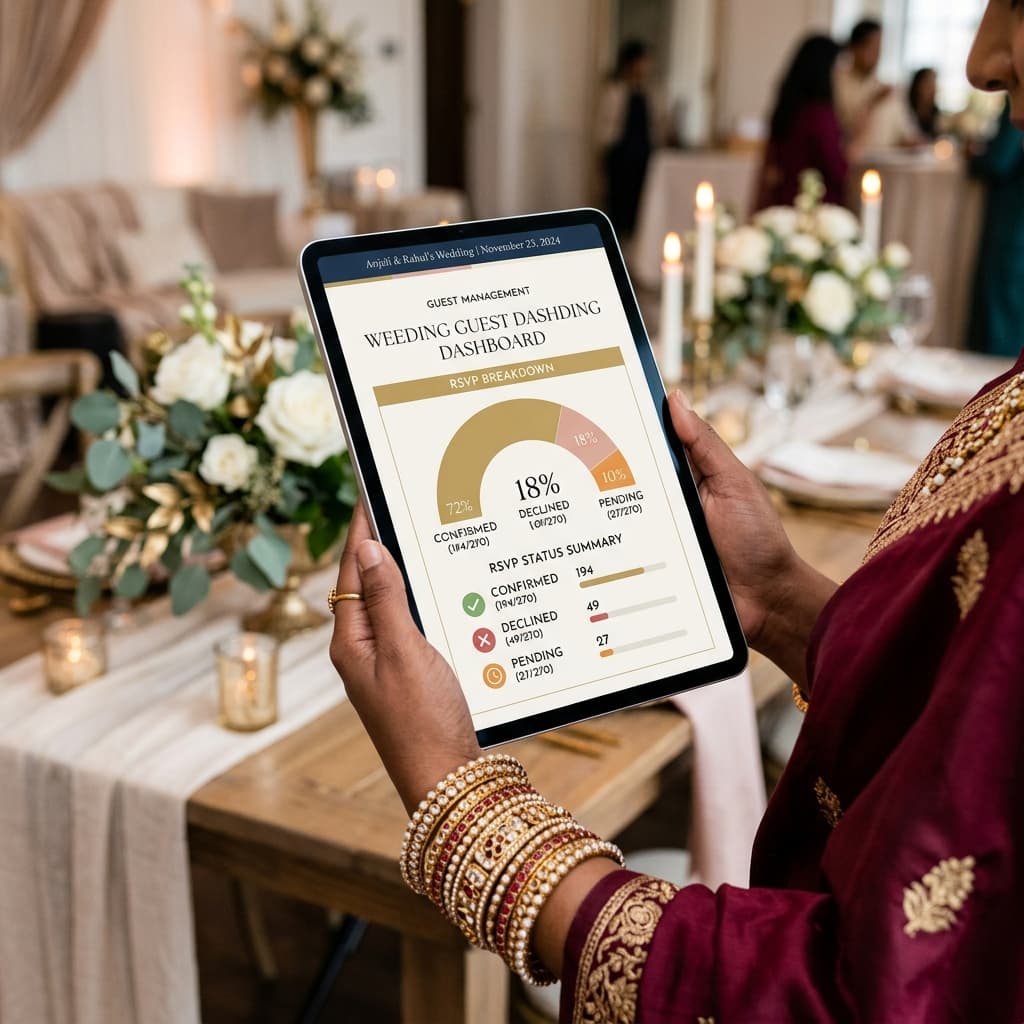
The moment a guest submits their RSVP, it appears in your dashboard. You can see:
- Total confirmed attendees per event
- Individual responses
- Guests who have not responded (filtered list for follow-up)
- Breakdown by family/group
4. Multiple Hosts Can Access
Your mother, your fiancé's parents, and the wedding coordinator should all be able to see the same data. A shared, cloud-based dashboard eliminates the "who has the latest count" problem.
How Nimantran Studio Handles RSVP
Nimantran Studio includes a complete RSVP system with every wedding bundle. Here is how it works:
Step 1: Create your wedding profile (takes 10 minutes)
Step 2: Your invitation cards are automatically generated for each function
Step 3: Each card includes an embedded RSVP link
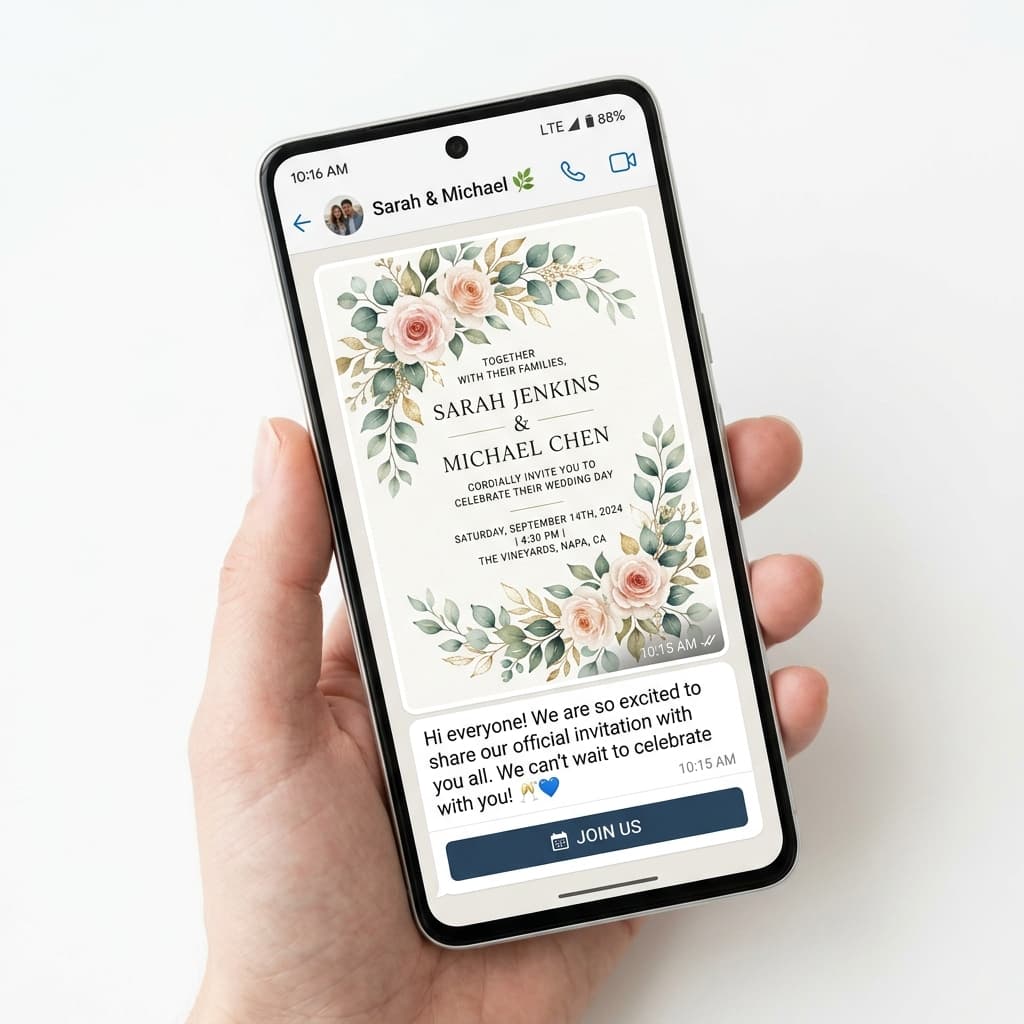
Step 4: Share cards via WhatsApp or any channel
Step 5: Watch RSVPs come in on your live dashboard in real time
The Guest Experience
When a guest receives your invitation and taps the RSVP link, they see a clean, mobile-friendly page with:
- Your wedding details and branding
- A simple form to confirm attendance
- An optional message field
The experience is elegant — it feels like a proper response to a proper invitation, not a Google Form.
RSVP Best Practices for Indian Weddings
Set a Clear Deadline
Mention the RSVP deadline in your message: *"Kindly confirm by [Date] so we can arrange accordingly."* Indian social dynamics mean guests need a social permission structure to respond promptly.
Follow Up With Non-Responders
Your dashboard will show who has not responded. One week before the event, send a gentle follow-up to non-responders: *"We would love to have you join us! Kindly confirm when you get a moment."*
Account for +1s and Families
Indian weddings rarely have single-attendee RSVPs. Most guests will bring spouses, parents, or children. Ensure your RSVP form captures the number of people attending, not just a yes/no.
Close RSVPs 5 Days Before
Close your RSVP system 5 days before each event. This gives you time to give final numbers to the caterer and venue. Anyone confirming after that point goes into a "waitlist/late confirmation" category.
RSVP Numbers: What to Expect
Based on patterns from Indian weddings using digital RSVP:
| Relationship Type | Expected Response Rate |
|---|---|
| Immediate family | 95–100% |
| Close friends | 80–90% |
| Extended family | 60–75% |
| Colleagues | 40–60% |
| Distant relatives | 30–50% |
Factor these in when giving your caterer a "confirmed" number. Add a 10–15% buffer for last-minute attendees who confirm at the venue.
The Result: A Calmer Wedding Week
Couples who use digital RSVP consistently report one thing: the week before the wedding was calmer than it had ever been for their family.
Instead of 4 people managing 4 different lists, there is one source of truth. Instead of phone calls, there are dashboard numbers. Instead of guessing, there is data.