Punjabi Weddings: The Standard for Indian Wedding Celebrations
Ask anyone who has attended a Punjabi wedding — they will describe it in one word: dhamakedaar.
The food. The music. The bhangra. The emotion during Anand Karaj. The 3am dancing. Punjabi weddings are not just celebrations — they are complete experiences.
This is a guide to every ritual, for guests and couples alike.
The Complete Punjabi Wedding Function Schedule
Pre-Wedding Rituals
1. Rokka / Roka
The formal start. Both families meet, exchange gifts and sweets — signalling that the alliance is approved. Not always a big event, but often the first "official" celebration.
2. Chunni Ceremony
The groom's family visits the bride's home and presents her with a dupatta (chunni) — formally welcoming her into their family. Often emotional — this is the moment the bride officially "belongs" to both families.
3. Mehendi / Mehndi
For the bride and female guests. Held at the bride's home, typically 1–2 days before the wedding. Lavish mehendi designs with the groom's name hidden within.
4. Jaggo
One of the most uniquely Punjabi rituals. The night before the wedding, women from both families walk through the neighbourhood carrying a decorated pot (ghada) with diyas on it, singing traditional folk songs. It is joyous, loud, and deeply traditional.
5. Haldi / Vatna
Applied separately at bride's and groom's homes. In Punjabi tradition, the paste (vatna) often includes mustard oil, gram flour, and turmeric — and the family sings traditional songs while applying.
Wedding Day Rituals
6. Ghori Chadna (Baraat)
The groom arrives on a decorated horse (ghodi) to the wedding venue. His male relatives and friends dance bhangra beside him. The arrival is announced with dhol, and it sets the tone for the entire celebration.
7. Milni
Before the ceremony begins, the two families are introduced formally — each member introduced, exchanges of garlands and envelopes. It is both ceremonial and deeply warm.
8. Anand Karaj — The Sikh Wedding Ceremony
Anand Karaj means "blissful union." This is the Sikh wedding ceremony, performed in a Gurudwara in the presence of the Guru Granth Sahib.
Four laavaan (rounds) are performed:
- First lavan: Departure from family
- Second lavan: Meeting of minds and hearts
- Third lavan: detachment from ego
- Fourth lavan: Divine bliss of union
Each round is accompanied by the recitation of the corresponding shabad (verse) from Guru Granth Sahib. Guests should be dressed modestly, heads covered, and shoes removed.
Duration: Typically 45–90 minutes.
9. Doli — Bidaai
The bride's departure from her parental home. Considered one of the most emotional moments of an Indian wedding across all communities. She throws puffed rice (laja) over her head as she leaves, symbolising continued prosperity for her family.
Post-Wedding
10. Pag Phera
The bride returns to her parental home for the first time after the wedding — usually the next day. She brings sweets and gifts. Her family hosts a lunch or dinner.
11. Reception
Grand celebration at the groom's family venue. This is often the largest function — formal dress, full guest list, and an extended celebration.
What Guests Should Know Before a Punjabi Wedding
- Dress code: Festive and colourful. Suits, lehengas, sherwanis. For Anand Karaj: head covered, no shorts or sleeveless.
- Timing: Bhangra and dancing are expected. Comfortable footwear is wise.
- Food: Punjabi wedding food is non-negotiable legendary. Come hungry.
- Duration: Plan for long. A Punjabi wedding day runs 12–16 hours.
Creating Invitations for a Punjabi Wedding
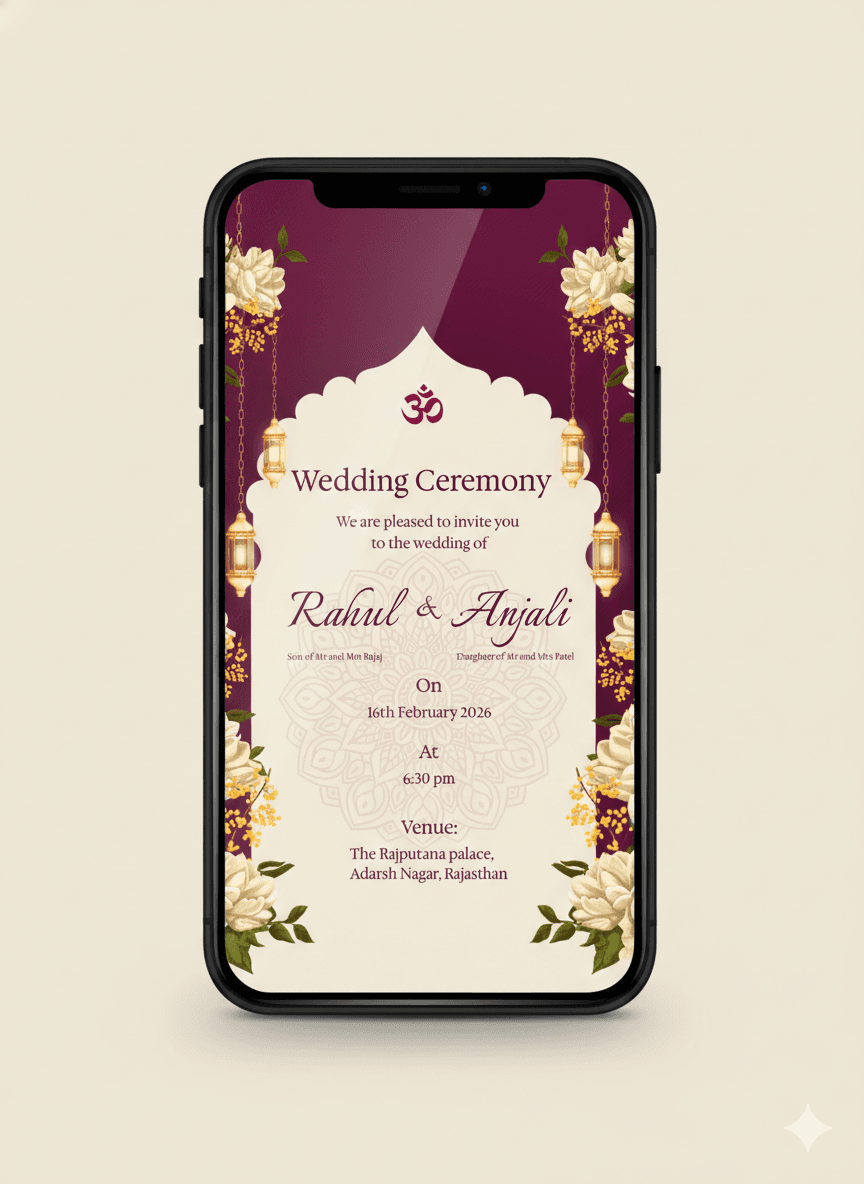
A Punjabi wedding invitation should carry the energy of the celebration. Rich jewel tones — deep red, navy, emerald — with gold accents. Traditional Punjabi folk motifs or phulkari-inspired borders.
Nimantran Studio's Royal Rajputana and Heritage themes work beautifully for Punjabi weddings — grand, rich, and unapologetically celebratory.